Home › Blog › How to get coaching clients without social media
MarketingHow to Get Coaching Clients Without Social Media

Yes, you can get coaching clients without social media. The way to do it is to build your own email list with a free gift, grow it through routes that don't need daily posting, and send emails that help people get to know and trust you over time. Social media can play a role if you enjoy it, but it isn't compulsory, and it isn't where the relationship should live.
Can You Really Get Coaching Clients Without Social Media?
Social media feels like the default marketing channel for coaches right now, but it's rented land. The platform decides who sees your posts, and it can change the rules overnight.
Accounts get restricted. Algorithms shift.
Reach drops without warning.
Your email list is land you own. Every person on it asked to be there. That's a very different kind of relationship to a follower who may never see your posts.
Therapists and counsellors often ask this question too, because the idea of posting personal content publicly every day doesn't sit well with professional boundaries. The answer is the same: you don't need social media to build a practice. You need a way for people to find you, a reason for them to give you their email address, and emails that help them feel like they know you.
Clients come from relationships. People need to know you exist, get a sense of who you are, and trust you before they book. Everything in this post is built around that idea.
If you work with therapy or counselling clients specifically, you might also find How to Get Therapy and Counselling Clients useful alongside this post.
Why Is Your Email List Worth More Than Your Followers?
A follower is someone who's clicked a button once. A person on your email list chose to hear from you, and they've given you their email address to make that happen.

When you send an email, it lands in their inbox. You don't need an algorithm to approve it.
You don't need to post at the right time or use the right hashtags. You just show up in a place they already check.
That's why building your email list is the most important marketing task for a coach who wants a sustainable practice. It's also why I'd encourage you to read Email Marketing: More Than Selling, because the way you use your list matters just as much as how you build it.
Social media can still help, especially if you enjoy it. But it works best as a path that leads people to your email list, not as the place where the relationship lives.
What Do You Need Before You Start?
Three things, and they're all straightforward.
A free gift people actually want. It's something useful you give away in exchange for an email address. It could be a short guide, a checklist, a workbook, a mini audio, or a short video. It should answer a real question your ideal client is already asking.
A simple sign-up page. This doesn't need to be fancy. It needs a clear headline that says what the free gift is and what someone gets from it, and a form where they can enter their name and email.
An email platform. MailerLite, Kit (formerly ConvertKit), and Flodesk are all popular with coaches. Most have a free plan to start with. Your platform sends your free gift automatically when someone signs up, and it's where you write and send your emails.
That's the foundation. Once it's in place, you're ready to start growing.
What Are the Best Ways to Get Coaching Clients Without Social Media?
These are the routes that work without daily posting. You don't need all of them. Pick one that suits you and start there.
Your free gift on your home page
Your home page is often the first place someone lands when they find you. Make your free gift visible there, near the top of the page.

A "book a call" button as the first thing someone sees is like a proposal on a first date. They don't know you yet.
Give them something useful first, and let the relationship build from there.
Your About page
People reading your About page are deciding whether they like you. Add a sign-up invitation there, with a line about your free gift. It's a natural place for it, because someone reading about you is already interested.
A pop-up on your website
A well-timed pop-up that offers your free gift can work well. Set it to appear after someone's been on your site for a little while, so it doesn't interrupt them the moment they arrive. Keep the copy simple and focused on what they'll get.
Your email signature
Every email you already send is an opportunity. Add a short line to your signature with a link to your sign-up page.
Something like: "Want [free gift name]? Grab it here."
It takes minutes to set up and works in the background every day.
Gift swaps with a trusted colleague
Find a colleague whose audience overlaps with yours and who you respect. You offer their free gift to your email list, and they offer yours to theirs.

You're being introduced by someone their audience already trusts, which makes a real difference. Reach out to one person you already know and suggest it.
Cross promotions with practitioners whose work sits alongside yours
Think about who else your ideal clients might work with. A coach working with people going through career change might connect well with a financial adviser or a resume writer.
You're not competing, so there's room to recommend each other. A simple mention in an email or a newsletter swap can introduce you to people who are already looking for support.
Speaking, in person or online
Local business groups, community organisations, library events, online gatherings: people who hear you speak get a strong sense of who you are very quickly. Offer something useful, mention your free gift at the end, and make it easy for people to sign up on the spot.

Podcast guesting and online summits
When you're a guest on someone else's podcast or summit, you're borrowing their audience's trust. The host's already done the work of building a relationship with their listeners.

Your job is to be useful and to mention your free gift clearly. Start by reaching out to hosts whose audience matches yours, with a clear pitch about what you'd cover.
Blog posts that answer the questions your clients are already searching
A blog post that answers a real question keeps working long after you write it. Someone types a question into Google at 11pm, finds your post, reads it, and signs up for your free gift.
You're asleep. It's one of the most sustainable routes there is, and it compounds over time.
If you want to understand how AI search tools like ChatGPT and Google AI Overviews find and quote content, What is GEO? Get Found by AI Search is worth a read.
Guest posts on other people's blogs
Writing for someone else's blog puts you in front of their readers. Choose blogs your ideal clients are likely to read, pitch a topic that's useful to that audience, and include a link back to your sign-up page in your author bio. One well-placed guest post can bring in a steady trickle of new people over time.
A Google Business Profile
If you see clients in person, or even if you work locally online, a Google Business Profile is free and helps people in your area find you when they search for coaching or counselling.
What Should You Send So People Get to Know You?
Once someone's on your email list, your job is to show up in a way that feels like a conversation.
The emails that build trust are the ones that sound like you wrote them to one person. A useful idea you've been thinking about.
A short story from your own experience. An answer to a question a client asked you recently.
Something that gives people a real sense of how you think and what it might be like to work with you.
Every now and then, an invitation to work with you. Not every email, but regularly enough that people know it's an option.
How often you send is less important than sending consistently enough that people remember who you are. Once a week works well for many coaches.
Fortnightly works for others. What matters is that you show up regularly enough that your name feels familiar when someone finally decides they're ready to book.
For a closer look at what to avoid, The 5 Biggest Mistakes Coaches Make With Email Marketing covers the patterns that tend to get in the way.
Where Do You Start?
Pick one route from the list above. Just one.
If you already have a website, start with your home page or your email signature. If you've got colleagues you trust, reach out about a gift swap. If you enjoy speaking, look for one local or online event where you could offer something useful.
You don't need to do all of this at once. You need to do one thing consistently until it's working, and then add the next.
If you'd like a clear map of your options, my 12 Ways to Grow Your Email List guide is a 16-page, $7 resource that walks through twelve routes in practical detail. And if you'd prefer a step-by-step plan with one small action each day, the Add500 challenge is built for exactly that.
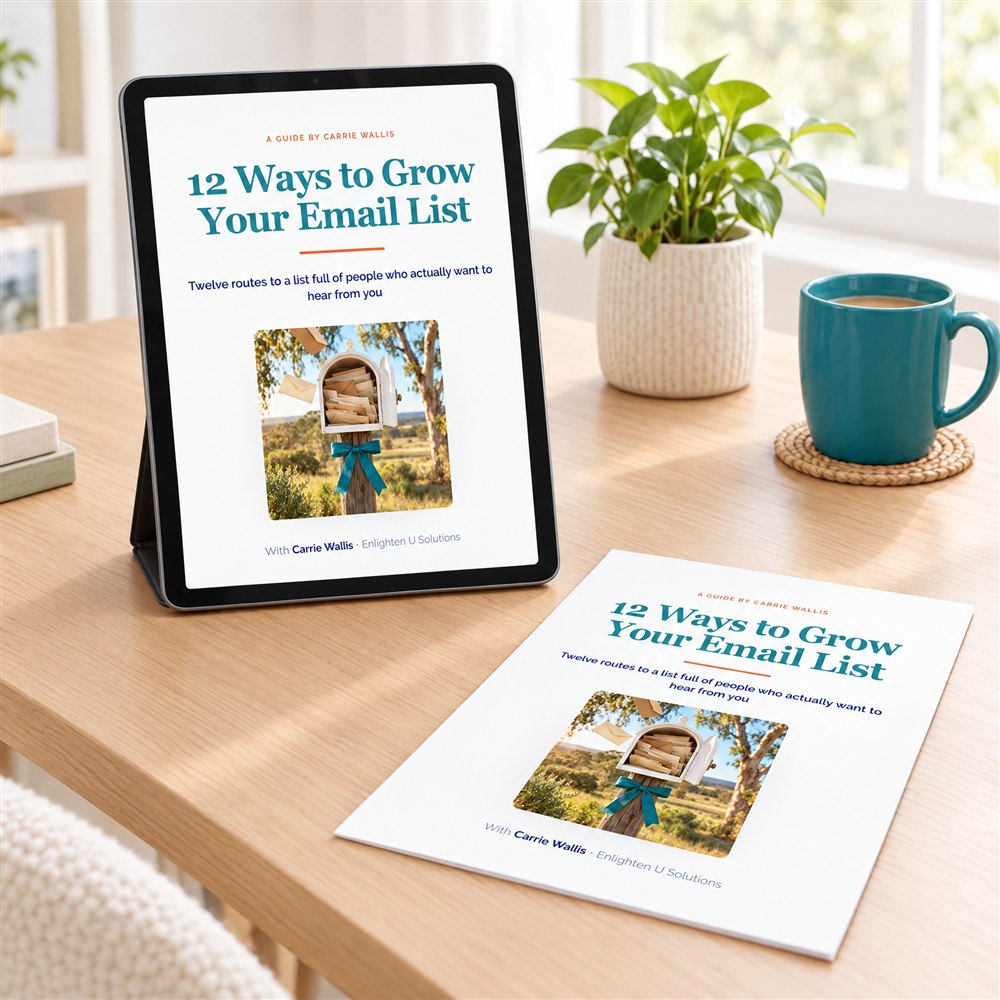
Pick Your Route and Actually Start Today
This 16-page guide explains how each route works and who it suits, so you'll know which one fits where you're at right now. It's $7 and done in an afternoon.
Find Your Starting PointFrequently Asked Questions
How do I get my first coaching client without social media?
Start with the people who already know you. Let your existing contacts know what you do and who you help. Set up a simple free gift and a sign-up page, then tell people about it directly, whether that's by email, in conversation, or through your website. Your first client is more likely to come from a warm connection than from a cold audience. Focus on being findable and on making it easy for people to take a next step with you.
Is email marketing better than social media for coaches?
For building the kind of trust that leads to bookings, email tends to work better over time. You're writing directly to someone who asked to hear from you, and your message reaches them without an algorithm deciding whether it's worth showing. Social media can help people discover you, but email is where the relationship deepens.
How do coaches get clients online without posting every day?
By building routes that work without daily effort. A blog post, a podcast appearance, a gift swap with a colleague, or a Google Business Profile can all bring people to your email list without you needing to show up on social media every morning. Once someone's on your list, your emails do the relationship-building work. You don't need to be everywhere. You need a few routes that suit you and an email list that grows steadily.
Do I need a big email list to get clients?
You don't. A small list of people who connect with your work will bring in more clients than a large list of people who barely remember signing up. What matters is that the people on your list are the right people, and that your emails give them a real sense of who you are. Start where you are and focus on the relationship, not the numbers.

Carrie Wallis
Marketing mentor to coaches and helping professionals, and creator of the "From Strangers to Clients" ethical, relationship-based marketing system. A best-selling author, certified copywriter and digital marketer, certified in multiple coaching modalities. In business since 2000, Carrie teaches a simple, repeatable way to attract the right clients, so you can grow your practice while still living the life you choose.